Villa Renovation Guide
A clear, practical guide to the approvals, NOCs, and building permits behind a compliant villa renovation in Dubai.
Renovating a villa in Dubai can transform an ordinary property into a more comfortable, functional, and modern home. Whether you are planning a complete villa renovation and interior design project, updating your kitchen and bathrooms, adding new rooms, changing the layout, or upgrading your outdoor spaces, proper planning is essential.
One of the most important parts of the renovation process is understanding villa renovation permits and NOCs in Dubai. Starting construction without the required approvals can lead to delays, additional costs, or compliance issues.
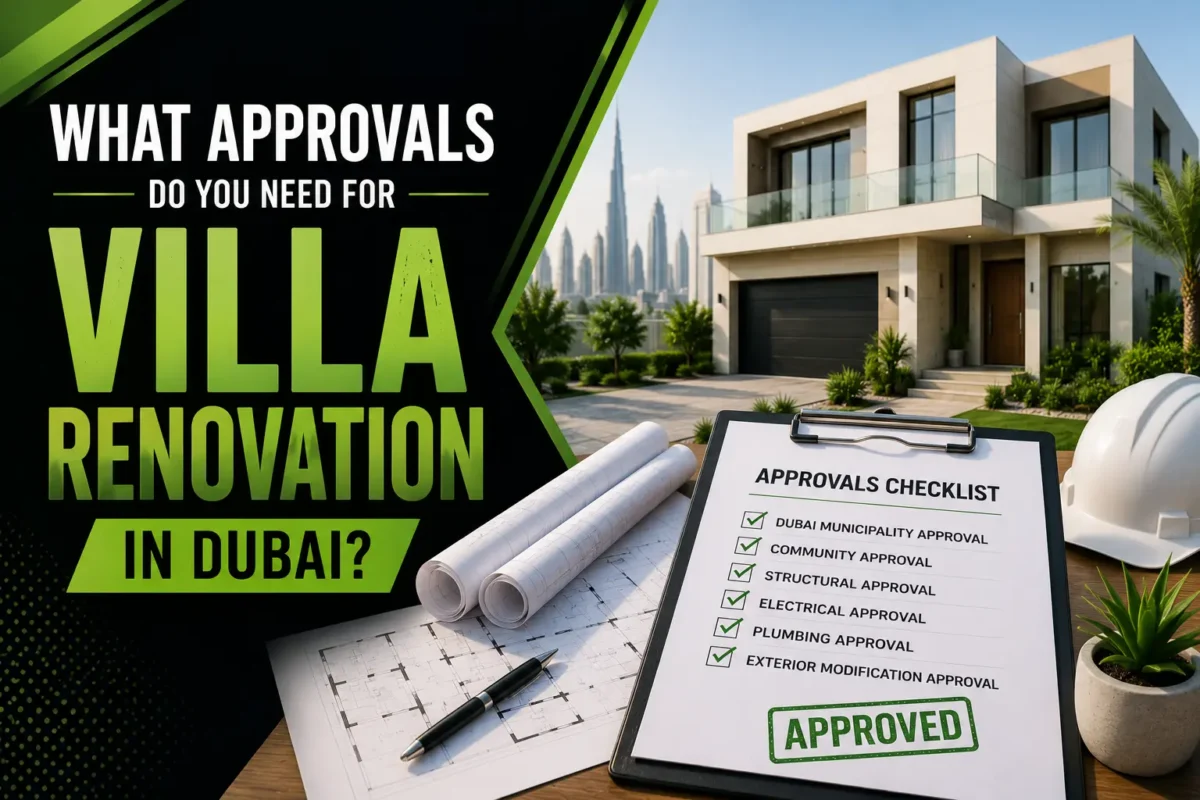
Dubai has established building permit procedures to ensure that renovation and construction work follows approved safety, planning, and building standards. Depending on your property and the type of work planned, approvals may involve Dubai Municipality, the Dubai Development Authority (DDA), a master developer, community management, or other relevant authorities.
Do You Need a Permit for Villa Renovation in Dubai?
Not every renovation project requires the same level of approval. Simple cosmetic improvements, such as repainting walls or replacing certain finishes, may have different requirements from structural modifications, extensions, demolition, or major alterations to electrical and plumbing systems.
Dubai Municipality specifically provides services for modifications or additions to buildings, private villa extensions, decorative works, maintenance, and demolition. Before starting work, homeowners should first determine:
- What type of renovation is planned?
- Will any walls or structural elements be changed?
- Are new rooms or extensions being added?
- Will electrical, plumbing, drainage, or other building systems be affected?
- Is the villa located within a managed residential community?
- Which authority and developer control approvals for the property?
This initial assessment helps determine which permits and NOCs are required.
What Is an NOC in Dubai Villa Renovation?
NOC stands for No Objection Certificate. It is an official confirmation from the relevant authority, developer, property manager, or service provider that it has no objection to the proposed work.
For villa renovations, the NOC process can depend on the location and ownership structure of the property. In many managed villa communities, homeowners may need approval from the master developer or community management before renovation work can proceed. An NOC may review factors such as:
- Proposed renovation drawings
- Construction scope
- Structural changes
- External appearance
- Working hours
- Site access
- Waste removal
- Parking and deliveries
- Impact on shared infrastructure
- Contractor details
The exact requirements should always be confirmed for your specific community before work begins.
Dubai Villa Renovation Permit Process
Although the exact process can vary, a typical renovation journey involves several important stages.
1. Define Your Renovation Scope
Start by clearly identifying everything you want to change. For example, your project may include:
- Kitchen renovation
- Bathroom renovation
- Flooring replacement
- False ceilings and lighting upgrades
- Room reconfiguration and new partitions
- Villa extensions
- Outdoor landscaping and swimming pool improvements
- External facade changes
- Electrical and plumbing upgrades
A clear scope helps your consultant determine which approvals are necessary.
2. Work With a Qualified Consultant
For renovation projects involving technical drawings, structural changes, additions, or other regulated work, working with an appropriately qualified consultant can make the approval process much easier. The consultant can assess the existing villa, prepare drawings, identify applicable requirements, and coordinate submissions.
Dubai Municipality’s building permit procedures cover residential villas and require relevant applications, drawings, documents, and other information through the applicable permitting process.
3. Prepare the Required Drawings and Documents
Depending on the project, authorities or community management may request documents such as:
- Existing and proposed floor plans
- Architectural drawings
- Structural drawings where applicable
- Electrical and plumbing drawings
- Villa or plot information
- Owner, contractor, and consultant documentation
- Project scope
- Other supporting approvals or NOCs
The documentation depends on the nature of the renovation, so homeowners should avoid assuming that every villa project has the same requirements.
4. Obtain the Required NOCs
If your villa is located within a master-planned or managed community, you may need an NOC from the relevant developer or community management. Additional approvals can also be required depending on the renovation work and affected services. For example, certain projects may require coordination with utility or infrastructure authorities if the work affects existing systems.
The important point is that an NOC and a building permit are not necessarily the same thing. A developer or community approval does not automatically replace a government permit when one is required.
5. Submit the Permit Application
Dubai’s building permit system provides a unified online route for building permit applications. The official process includes submitting the application and required information, obtaining approvals, paying applicable fees, and receiving the issued permit.
Dubai Municipality’s published villa permit procedure explains that applications can include drawings and documents, building card information, and permit fees. Relevant authorities can review the application and upload required NOCs through the Dubai Building Permit System.
6. Wait for Approval Before Starting Work
One of the most important rules for homeowners is simple: do not begin regulated renovation work before receiving the required approvals. Starting construction early can create complications if the proposed work does not match approved drawings or violates community requirements. Your contractor should work according to the approved scope and drawings.
7. Complete Inspections and Close the Project
Depending on the project, inspections may be required during or after construction. Dubai Municipality’s building permit procedures include inspection stages and final inspection or completion processes. For modifications, additions, and decorative works, the relevant inspection requirements depend on the work being carried out.
Once the renovation is completed, make sure the project is properly closed out and that required completion documentation is obtained where applicable.
Which Renovations May Require More Approvals?
Some projects naturally involve greater regulatory attention than simple cosmetic upgrades.
Structural Changes
Removing or modifying structural walls, altering slabs, or making other structural changes may require technical assessment, approved drawings, and relevant permits.
Villa Extensions
Adding additional built-up space or extending parts of a private villa is a regulated activity. Dubai Municipality provides a specific service for permits related to extensions to private villas.
Demolition
If your renovation requires partial or complete demolition, do not treat it like ordinary interior work. Dubai Municipality provides a dedicated demolition permit service, including permits for fully or partially demolishing buildings.
External and Facade Changes
Changes to the exterior appearance of a villa may be subject to planning, design, community, or developer requirements. This is particularly important in communities where homes must follow specific architectural guidelines.
Electrical and Plumbing Changes
Major changes to building services can require additional technical coordination and approvals, especially when existing infrastructure may be affected.
Common Mistakes Homeowners Should Avoid
Renovation problems often occur because homeowners focus on design and budget but overlook approvals. Here are some common mistakes to avoid:
- Starting work before approval: Do not allow contractors to begin regulated work simply because the design has been finalized.
- Assuming every villa has the same requirements: Approval requirements can differ according to the property’s location, community, scope of work, and applicable authority.
- Ignoring the master developer: If your villa is located in a managed community, developer or community approval may be an important part of the process.
- Using incomplete drawings: Incomplete or inconsistent drawings can result in revisions and delays.
- Making changes after approval without checking: If the actual renovation differs significantly from the approved drawings, additional approval may be necessary.
- Choosing a contractor based only on price: An experienced renovation contractor should understand documentation, approvals, site requirements, and coordination, not just construction.
How Long Does the Villa Renovation Approval Process Take?
There is no single timeline that applies to every villa renovation in Dubai. The approval period can depend on project size, type of renovation, required drawings, number of approvals, community requirements, authority review, required revisions, structural changes, and additional NOCs.
A straightforward renovation may involve fewer approvals, while a large villa extension or structural renovation can require considerably more coordination. For this reason, homeowners should build approval time into the overall renovation schedule rather than treating permits as an afterthought.
How Much Do Villa Renovation Permits Cost in Dubai?
Permit and approval costs can vary depending on the type and scale of work, applicable authority, consultant involvement, and other project requirements. Instead of relying on a fixed online figure, homeowners should ask their consultant or renovation company for a project-specific estimate covering:
- Permit fees
- Consultant fees
- NOC or community charges where applicable
- Drawing and documentation costs
- Inspection-related costs
- Other authority or service charges
This provides a more realistic renovation budget.
Why Professional Renovation Support Matters
The permit and NOC process can become complicated when a project involves several parties. A professional villa renovation company in Dubai can help coordinate the renovation from initial planning through approvals and construction. An experienced design and contracting team can also help homeowners understand which parts of the project may require additional approvals before work starts.
At Home Master Dubai, the focus is on creating renovation solutions that combine design, functionality, quality, and practical project coordination.
Final Thoughts
Understanding villa renovation permits and the NOC process in Dubai can help homeowners avoid unnecessary delays, unexpected costs, and compliance problems. The key is to determine the renovation scope first, identify the applicable authority and community requirements, prepare the necessary drawings and documents, obtain the required NOCs and permits, and only then begin construction.
Because requirements can vary from one property and project to another, homeowners should verify the current requirements with the relevant authority, master developer, or qualified consultant before starting work. Dubai Municipality continues to maintain dedicated procedures for villa permits, modifications, additions, maintenance, and other building activities.
Frequently Asked Questions
Do I need a permit for villa renovation in Dubai?
It depends on the scope of work. Simple cosmetic updates may have lighter requirements, while structural changes, extensions, demolition, and major electrical or plumbing work usually require permits and approvals from Dubai Municipality or the relevant authority, and often a developer or community NOC. Always confirm your project’s requirements before starting.
What is an NOC and is it the same as a building permit?
An NOC (No Objection Certificate) is confirmation from an authority, developer, or community that it has no objection to your proposed work. It is not the same as a government building permit. A developer or community NOC does not automatically replace a Dubai Municipality permit when one is required, and many projects need both.
Do I need approval from my master developer or community?
If your villa sits inside a managed or master-planned community, developer or community management approval is often part of the process, sometimes even for exterior or cosmetic works that affect the community’s appearance. Confirm the specific rules for your community before beginning.
Can I start renovation work before approvals are issued?
No. Regulated renovation work should not begin until the required approvals are in hand. Starting early can create serious complications if the work does not match approved drawings or breaches community requirements, and may lead to delays or compliance issues.
How long does the villa renovation approval process take?
There is no single fixed timeline. It depends on the project size, the number of approvals involved, community requirements, authority review, and whether structural changes or additional NOCs are needed. Larger extensions and structural renovations generally require more coordination, so approval time should be built into the overall schedule.
How much do villa renovation permits cost in Dubai?
Costs vary with the type and scale of work, the applicable authority, and consultant involvement. Rather than relying on a fixed online figure, ask your consultant or renovation company for a project-specific estimate covering permit fees, consultant fees, any community or NOC charges, drawings, and inspection-related costs.
Planning a Villa Renovation in Dubai?
From design and drawings to NOCs, permits, and final execution, our team can coordinate every step of your renovation.
Get in Touch