Renovation Timeline Guide
How Long Does a Full Villa Renovation Take in Dubai?
A full villa renovation in Dubai usually takes between four and six months for a standard family villa, while larger or luxury projects with structural changes can run from six to nine months, and sometimes up to a year. The exact timeline depends on the size of your villa, the scope of work, material lead times, and how quickly permits and community approvals come through.
Renovating a villa is a big commitment, and one of the first questions most owners ask is simple: how long will I be living around dust sheets and contractors? The honest answer is that no two projects are identical. A cosmetic refresh moves fast, while a full transformation that touches layouts, plumbing, and electrics needs careful sequencing. This guide breaks down a realistic timeline stage by stage, so you know what to expect from the day you sign off on the design to the day you get your keys back.
The Short Answer: Typical Villa Renovation Timelines
Before we get into the detail, here is a quick overview based on the type of project. These ranges assume you are working with an experienced contractor and that approvals move at a normal pace.
| Project Type | Typical Duration | What It Involves |
|---|---|---|
| Cosmetic refresh | 4 to 8 weeks | Painting, flooring, minor fixtures, no layout changes |
| Partial renovation | 2 to 4 months | Kitchen or bathrooms, some joinery, light MEP work |
| Standard full villa | 4 to 6 months | Full interior, updated MEP, new finishes throughout |
| Luxury or structural | 6 to 9 months | Layout changes, extensions, high-end finishes, imported materials |
The rest of this guide explains what happens inside those months, because understanding the phases is the best way to keep your renovation on schedule.
What Determines How Long Your Renovation Takes
A few key factors have the biggest effect on your timeline. Getting clarity on these early helps you plan realistically and avoid surprises later.
- Villa size and layout: A three bedroom villa naturally finishes faster than a six bedroom home with multiple living areas.
- Scope of work: Moving walls, changing plumbing routes, or adding a room takes far longer than replacing surfaces.
- Approvals and permits: Community and municipality approvals can add weeks, especially in developer managed areas.
- Material availability: Imported stone, bespoke joinery, and specialist fixtures often carry long lead times.
- Contractor capacity: A well staffed team running trades in parallel finishes noticeably faster than a small crew.
Phase by Phase: A Realistic Renovation Timeline
Here is how a typical full villa renovation unfolds from start to finish. Some phases overlap, which is exactly how good project managers save time.
1. Design and Planning (2 to 4 weeks)
Everything starts on paper. This is where concepts are drawn, layouts are finalised, and materials are selected. Investing proper time here prevents costly changes once work begins. If your project leans toward a high end finish, our team at luxury villa interior design in Dubai can help translate your ideas into detailed drawings before a single wall is touched.
2. Approvals and Permits (2 to 6 weeks)
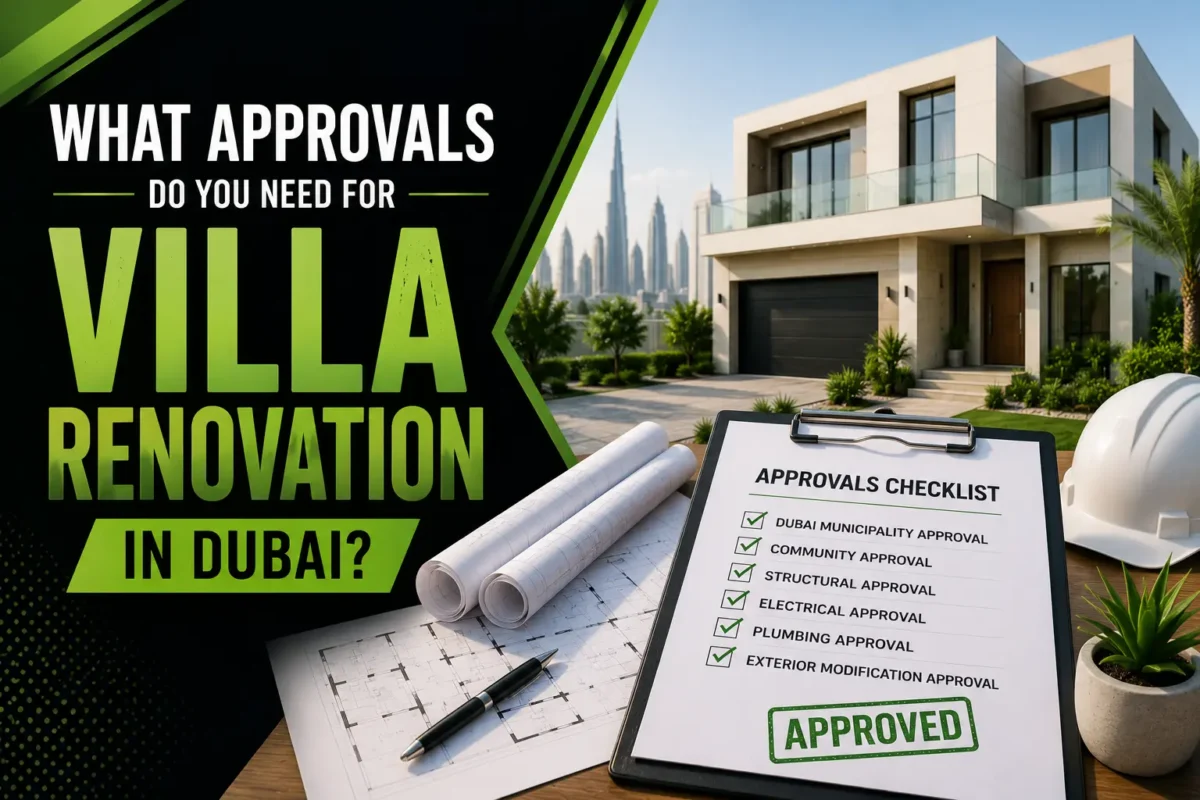
Dubai requires the right approvals before major work can legally begin. Depending on your area, this may involve Dubai Municipality, the relevant free zone authority, and a no objection certificate from your community developer. This phase often runs in parallel with design, so an organised contractor will start it early rather than waiting.
3. Demolition and Site Preparation (1 to 2 weeks)
Once approvals are in place, the old finishes come out. Walls marked for removal come down, existing fixtures are stripped, and the site is prepared for the new build. This stage is fast but messy, and clear site protection matters here.
4. Structural and First Fix MEP (3 to 6 weeks)
This is the backbone of the renovation. Any structural changes happen now, followed by the first fix of mechanical, electrical, and plumbing systems. New wiring, pipe routes, and air conditioning runs are installed before anything gets covered up. Rushing this phase causes problems later, so it deserves patience.
5. Plastering, Flooring, and Tiling (3 to 5 weeks)
With services in place, surfaces start to take shape. Walls are plastered, floors are laid, and wet areas are tiled and waterproofed. If you are updating floors throughout, our flooring services cover everything from porcelain to natural stone and engineered timber.
6. Joinery, Kitchen, and Wardrobes (3 to 6 weeks)
Custom kitchens, wardrobes, and built in units are manufactured and installed during this stage. Because joinery is often made off site, smart scheduling means it is being built while other trades work, which keeps the overall timeline tight. Bathroom fit out also progresses here, and our bathroom renovation team handles everything from vanities to fixtures.
7. Painting and Finishing (2 to 3 weeks)
Now the villa starts to look like a home again. Walls receive their final coats, decorative details are added, and finishes are refined. Quality painting makes a huge difference to the final result, so this phase should never feel rushed.
8. Second Fix, Fixtures, and Snagging (2 to 3 weeks)
The final details bring everything together. Light fittings, switches, sanitaryware, and door hardware are installed. A thorough snagging inspection then catches every small imperfection so it can be corrected before handover.
Planning tip: Add a small buffer of two to three weeks to whatever timeline your contractor quotes. Weather, material deliveries, and approval delays are normal in any renovation, and a realistic buffer keeps your move back date stress free.
Factors That Can Speed Up or Slow Down Your Project
Two villas of the same size can finish weeks apart. These are the elements that push a timeline in either direction.
What Speeds Things Up
- Finalising all design decisions and material selections before work begins
- Choosing readily available local materials over long lead imports
- Working with a single contractor who manages every trade under one roof
- Getting approvals started early, in parallel with the design phase
What Slows Things Down
- Changing your mind on layouts or finishes mid project
- Waiting on imported stone, marble, or bespoke furniture
- Community working hour restrictions, common in residential districts
- Discovering hidden issues once walls are opened, such as old plumbing
A design and build approach, where planning and construction sit with the same team, removes a lot of the friction that causes delays. You can read more about how that works on our design and contracting page.
How to Keep Your Renovation on Schedule
The smoothest renovations share a few habits. Keep these in mind and you give your project the best chance of finishing on time.
- Lock in decisions early: The fewer changes you make once work starts, the faster everything moves.
- Order long lead items first: Imported materials and custom joinery should be ordered at the design stage.
- Agree a clear schedule: Ask your contractor for a phase by phase plan with target dates.
- Communicate weekly: Regular site updates catch small issues before they become delays.
- Trust the process: Some phases look slow but are protecting the quality of the finish.
Frequently Asked Questions
How long does a full villa renovation take in Dubai on average?
What takes the longest in a villa renovation?
Can I live in my villa during the renovation?
Do I need approvals before renovating my villa in Dubai?
How can I make my renovation finish faster?
Planning Your Villa Renovation?
Get a clear timeline and a transparent plan from a team that manages every stage under one roof.
Get Your Free Consultation