Villa Renovation Guide
How to Renovate a Villa Without Going Over Budget
You do not need an unlimited budget for a beautiful villa renovation. The key is to set a realistic budget with a contingency fund, prioritise essential repairs over cosmetic ones, lock in your design before work starts, choose materials on value rather than price, and work with an experienced contractor. Get these right and you can transform your Dubai villa while keeping costs firmly under control.
Renovating a villa can completely transform your home, making it more comfortable, modern, and functional. Without proper planning, though, renovation costs can quickly climb higher than expected. This matters especially for villa owners in Dubai, where material choices, labour, design upgrades, and property size all affect the final renovation cost. This guide walks through how to renovate a villa without going over budget, and how to make smart decisions at every stage of the project.
1. Set a Realistic Villa Renovation Budget
Before any work begins, decide exactly how much you can afford to spend. Your budget should cover far more than materials and labour. Factor in demolition and removal, building and repair work, painting, flooring, kitchen and bathroom upgrades, electrical and plumbing, doors and windows, lighting, fixtures and fittings, design or consultation costs, and cleaning and waste removal.
Just as important, keep an emergency reserve for the unexpected. A good rule is to hold back around 10 to 15 percent of your renovation budget as a contingency fund, which can cover surprise plumbing issues, electrical repairs, damaged walls, or other problems found once work begins.
2. Decide What Needs Renovation First
One of the easiest ways to control costs is to prioritise the work. Not every part of your villa needs renovating at once. Start with the areas that affect safety, function, and the overall condition of the property, then work down to cosmetic upgrades.
A sensible order of priority is: structural repairs first, then plumbing and electrical problems, water damage, damaged flooring or walls, kitchen and bathroom improvements, interior painting, and finally decorative upgrades. This puts your money where it creates the most practical value, rather than spending on cosmetic changes before the essentials are handled.
3. Create a Detailed Renovation Plan
A renovation without a clear plan gets expensive fast. Before work starts, prepare a detailed list of everything you want to change, including rooms, materials, finishes, colours, fixtures, and design style. Rather than a vague goal like “renovate the kitchen,” break it down: replace the cabinets, change the countertop, upgrade the sink, install new lighting, repaint the walls, replace damaged flooring, and add storage where needed. A detailed plan clarifies the full scope and cuts down on costly last-minute decisions.
4. Get Multiple Villa Renovation Quotes
Never choose a contractor on the first price you receive. Request quotes from several experienced contractors and compare exactly what each one includes. A low quote is not always the cheapest option if important work has been left out. When comparing, check labour and material costs, the timeline, the scope of work, included finishes, waste removal, painting and preparation, plumbing and electrical work, and any additional charges.
Ask each contractor for a clear breakdown rather than a single total figure. This makes it much easier to see where your money is going and where you can trim unnecessary expenses.
5. Avoid Changing the Design Midway
One of the biggest causes of budget overruns is changing plans after construction has started. Moving a kitchen sink means extra plumbing, relocating electrical points means rewiring and wall repairs, and changing flooring after installation begins adds material and labour costs. Finalise your design and materials before the renovation starts, and if you do want a change, discuss it with your contractor and understand the added cost before approving it.
6. Choose Materials Based on Value, Not Just Price
Saving money does not mean buying the cheapest materials. Very cheap options often wear out quickly and cost more in repairs and replacements later. Instead, look for the right balance of price, quality, durability, and appearance. A durable flooring material can look premium without being the most expensive imported option, and the same logic applies to countertops, bathroom fixtures, tiles, doors, paint, lighting, and cabinet hardware. A good contractor can often suggest alternatives that achieve a similar look for less.
7. Refresh Instead of Replacing Where Possible
You do not always need to replace everything. Features still in good condition can often be refreshed instead. Repaint existing doors rather than replacing them, refinish suitable cabinets instead of installing new ones, swap damaged hardware rather than whole units, repaint walls instead of changing finishes, and update lighting fixtures instead of redesigning the electrical system. These small changes make a real visual difference while keeping material and labour costs down.
8. Be Smart About Kitchen Renovation Costs
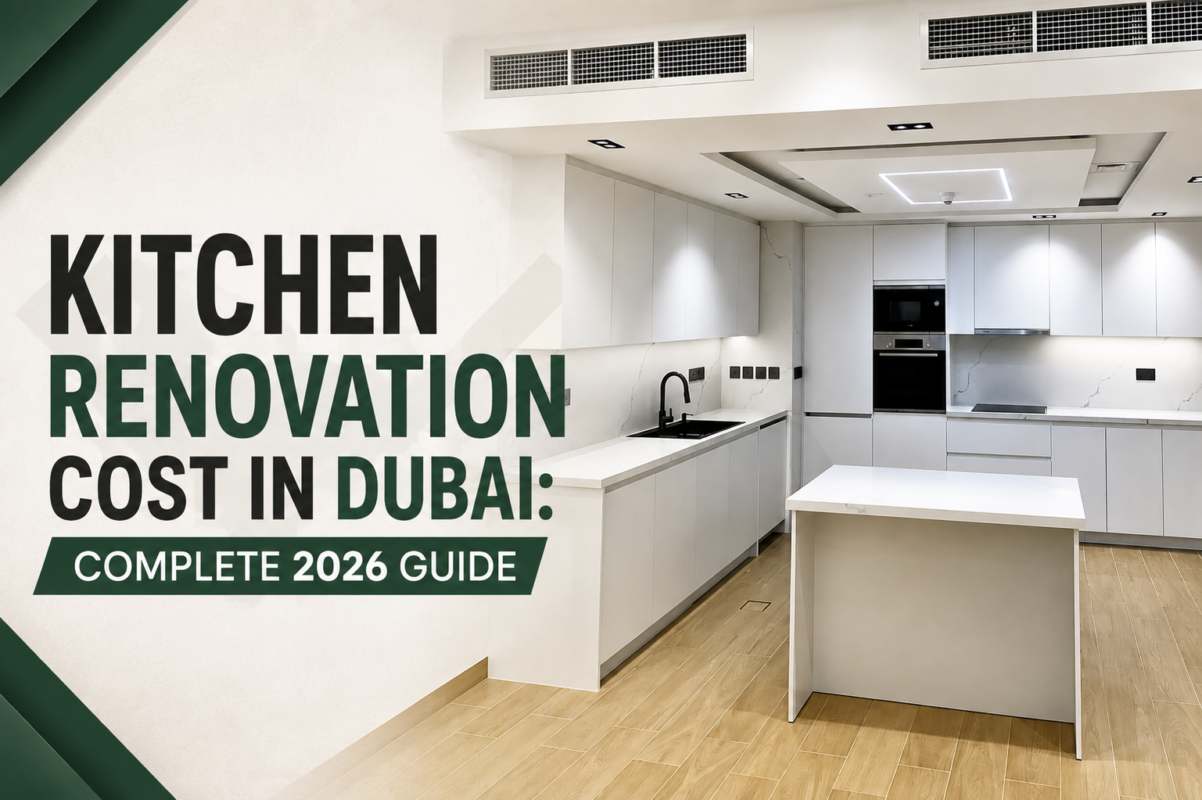
The kitchen is often the most expensive part of a villa renovation. If your existing layout works well, keeping the current plumbing and electrical positions avoids extra construction. You can still create a fresh look by focusing on high-impact upgrades: cabinet finishes, countertops, backsplash, lighting, handles and hardware, the sink and faucet, and wall paint. Upgrading the visible features while keeping the basic layout gives you a modern kitchen design without the cost of a full structural redesign. For a detailed breakdown, see our guide to kitchen renovation cost in Dubai.
9. Control Bathroom Renovation Expenses
Bathrooms also get expensive when the project involves moving plumbing or changing the whole layout. Where possible, keep major plumbing points in their existing positions. Instead of rebuilding the room, upgrade the wall and floor tiles, vanity, mirror, lighting, shower fixtures, faucets, storage, and paint. A well-planned bathroom renovation can feel far more modern without unnecessary structural changes.
Planning a villa renovation on a set budget? Get a free consultation and a clear, itemised quote before you start.
10. Do Not Ignore Hidden Renovation Costs
Unexpected expenses are one of the main reasons budgets grow. Older villas can hide problems that only appear once walls, floors, or ceilings are opened, such as leaking pipes, damaged wiring, moisture problems, cracked surfaces, poor previous repairs, water damage, or outdated electrical systems. This is exactly why your budget needs a contingency amount. It is far better to plan for surprises from the start than to run out of money halfway through.
11. Focus on High-Impact Improvements
When the budget is limited, prioritise changes that make a noticeable difference. A few relatively simple improvements can transform how a villa looks and feels.
- Interior painting: Fresh paint makes rooms look cleaner, brighter, and more modern.
- Lighting: Modern lighting improves both the appearance and the function of your home.
- Flooring: Replacing damaged or dated flooring has a major impact on the whole interior.
- Doors and hardware: Updating handles, door finishes, and selected fixtures gives a refreshed look.
- Storage: Better storage makes rooms feel organised without major structural work.
12. Work With an Experienced Villa Renovation Contractor
Trying to cut costs with an inexperienced contractor often leads to higher expenses later. Poor workmanship can cause material wastage, delays, rework, unexpected repairs, weak finishes, and extra labour costs. An experienced villa renovation contractor in Dubai helps you plan the project, estimate materials, coordinate the different trades, and find practical, lower-cost alternatives. Before hiring, ask about previous projects, scope of work, timeline, materials, and payment terms.
13. Keep a Record of Every Expense
During the renovation, track every payment against your plan. A simple budget sheet with planned versus actual costs keeps you in control.
| Category | Planned Cost | Actual Cost |
|---|---|---|
| Painting | AED ___ | AED ___ |
| Flooring | AED ___ | AED ___ |
| Kitchen | AED ___ | AED ___ |
| Bathrooms | AED ___ | AED ___ |
| Electrical | AED ___ | AED ___ |
| Plumbing | AED ___ | AED ___ |
| Labour | AED ___ | AED ___ |
| Contingency | AED ___ | AED ___ |
Review your spending regularly. If one area starts running over, you can adjust elsewhere before the total becomes hard to control.
14. Avoid Unnecessary Luxury Upgrades
Luxury finishes look impressive, but they can eat up a large share of your budget. Before choosing an expensive feature, ask whether it provides enough value for the extra cost. Often a mid-range material offers almost the same look and function as a premium one. This does not mean avoiding luxury altogether. Use premium materials selectively where they create the biggest impact, such as a feature wall, statement lighting, or a high-quality kitchen countertop, while choosing more affordable options for less noticeable areas.
15. Plan the Renovation Timeline Carefully
Time affects cost too. Delays increase labour expenses and can throw off other contractors and suppliers. Before starting, build a realistic schedule covering preparation, demolition, electrical work, plumbing, construction, flooring, painting, cabinet installation, fixtures, and final cleaning. Good coordination between the trades reduces downtime and prevents unnecessary costs.
16. Think About Long-Term Maintenance
A renovation should not only look good on completion, it should be practical to maintain. When choosing materials and finishes, consider how easy they are to clean, how durable they are, how often they need maintenance, whether replacement parts are easy to find, and how well they suit the local environment. A slightly higher upfront investment in a durable material can reduce maintenance and replacement costs down the line.
Budget tip: The two habits that protect a renovation budget most are locking in all decisions before work starts and keeping a 10 to 15 percent contingency fund. Together they absorb the surprises that push most projects over budget.
Final Thoughts
Renovating a villa without going over budget is absolutely possible with careful planning and informed choices. Start with a realistic budget, prioritise essential repairs, compare detailed quotes, choose materials on value, and avoid design changes once work has started, and always keep a contingency fund for the unexpected. Whether you are planning a small villa refresh or a complete transformation, an experienced team can manage the project from planning through to completion. If you are planning a villa renovation in Dubai, Home Master can help you approach it with practical planning, quality workmanship, and a clear focus on your requirements and budget.
Frequently Asked Questions
How much should I keep as a contingency for a villa renovation?
What is the most expensive part of a villa renovation?
How can I reduce villa renovation costs without lowering quality?
Why do renovation budgets usually go over?
Should I renovate my whole villa at once or in stages?
Planning a Villa Renovation in Dubai?
Get practical planning, quality workmanship, and a clear, itemised quote built around your budget.
Get Your Free Consultation