For roughly half the year, a Dubai garden is only usable after sunset. That single fact makes outdoor lighting in Dubai a functional system rather than a decorative afterthought, because without it the space you spent a fortune landscaping simply stops existing at seven in the evening. Yet most villa gardens here get lit badly. Too bright, too cold in colour, aimed at the boundary walls, and specified with fixtures that fail within two summers. Here is what separates a garden that looks good after dark from one that looks like a car park.
The Mistake Almost Every Dubai Garden Makes
Over lighting is the default error. Owners install high output floodlights, point them outward from the villa, and end up with a flat, glaring wash that flattens every texture in the garden.
Good landscape lighting works the opposite way. It uses less light, placed more carefully, with dark areas left deliberately dark. Contrast is what creates depth, so a garden lit evenly at high brightness looks worse than one lit selectively at low output.
Quick test: stand in your garden at night and look for the fixtures. If you can see the light sources rather than what they are lighting, the design has failed regardless of how expensive the fittings were.
Colour Temperature Changes Everything
This is the single decision that most affects how a garden feels, and it is also the one most often got wrong.
Warm white in the region of 2700K to 3000K flatters planting, stone, and timber. Cooler temperatures around 4000K and above read as clinical outdoors, drain colour from foliage, and make a villa garden look like a commercial forecourt.
Consistency matters just as much. Mixing colour temperatures across a garden is immediately noticeable, so specify one temperature and hold to it across every fixture type.
The Layers That Actually Work
Professional schemes build in layers rather than lighting everything with one product. Our landscape lighting design and installation service works through these four layers on every villa garden, and the balance between them is what makes a scheme feel considered rather than switched on.
Path and Step Lighting
Safety first, and low output is sufficient. Shielded fittings that throw light downward prevent the glare that ruins the rest of the scheme. Steps and level changes deserve dedicated attention, since these are where people actually trip.
Uplighting Trees and Walls
Uplighting creates the drama. Narrow beams on palm trunks, wider washes on textured walls, and grazing angles on stone all produce depth that flat lighting cannot. Aim carefully, however, because a badly aimed uplight becomes a glare source for you and your neighbours.
Task Lighting
Cooking and dining zones need genuine working light. An outdoor kitchen or BBQ area requires proper illumination over the working surface, ideally on a separate circuit so it can run bright while the rest of the garden stays soft.
Feature and Water Lighting
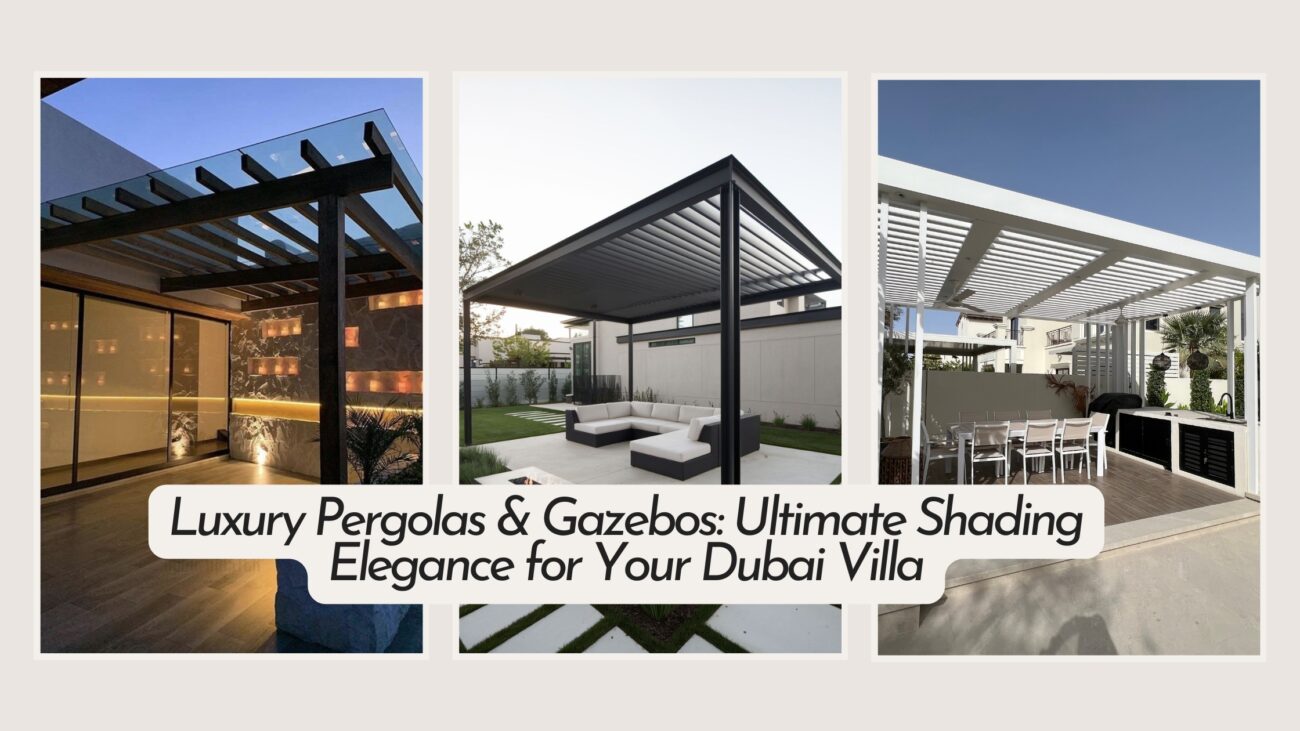
Submerged fittings transform a water feature after dark, provided they are properly rated for continuous immersion. Structures benefit too, and integrating strips into a pergola or shade structure during construction costs a fraction of retrofitting later.
What This Climate Does to Fixtures
Fixtures fail here for reasons that have little to do with brand. Outdoor lighting in Dubai lives with dust, salt, heat, and irrigation spray, so specification against local conditions decides how long a scheme lasts.
| Condition | What It Damages | What to Specify |
|---|---|---|
| Dust and sand | Lenses, seals, output | IP65 minimum, sealed optics |
| Irrigation and washdown | In ground fittings | IP67 for buried, IP68 for submerged |
| Coastal salt air | Housings and fixings | 316 stainless or quality marine grade finish |
| High ambient heat | LED drivers | Drivers rated for the temperature, remote where possible |
| Intense UV | Plastic lenses and cables | UV stable materials, avoid cheap polycarbonate |
Driver failure causes most of the problems people blame on the light itself. Consequently, keeping drivers accessible rather than sealed inside a buried fitting saves considerable expense over the years.
Low Voltage or Mains
Both work, and the right answer depends on the garden.
Low voltage systems running at 12V or 24V are safer around water and planting, easier to extend later, and simpler to adjust once the garden matures. Cable runs need attention though, since voltage drop over long distances dims the furthest fittings noticeably.
Mains systems suit larger plots and higher output requirements. They demand proper certified installation, correct earthing, and weatherproof terminations, so this is not an area for shortcuts.
Controls and Automation
A scheme with one switch gets used at one setting. Zoning is what makes lighting genuinely useful.
Separate circuits for paths, features, task areas, and the pool zone let you set the garden differently for a quiet evening than for entertaining. Astronomical timers adjust automatically as sunset shifts through the year, which beats a fixed timer that drifts out of step every few weeks.
App and voice control add convenience rather than transforming anything. Get the layout and circuits right first, because no amount of automation rescues a badly aimed scheme.
Solar Lighting: An Honest Assessment
Solar garden lights are marketed heavily and disappoint frequently.
Inexpensive stake lights carry small panels and modest batteries, so output is dim, run time shortens as the battery ages, and dust on the panel reduces charging further. In a climate this dusty, that decline happens faster than the packaging suggests.
Better quality solar with separate panels performs considerably more reliably, and it makes sense where running a cable is genuinely impractical. For a designed villa garden, however, a hardwired low voltage scheme delivers better light, better control, and a longer life.
Approvals and Electrical Safety
Garden lighting involves electrical work outdoors near water and irrigation, which is precisely why it needs doing properly.
New circuits, external supplies, and pool area lighting require certified installation and, in many cases, submissions. Communities frequently add their own rules about brightness and fittings visible from the street. Our team handles the necessary approvals and community NOCs as part of the works.
What Drives the Cost
Quotes for outdoor lighting in Dubai vary widely because the fixture is often the smallest part of the bill.
- Number of zones and circuits required
- Fixture quality, particularly IP rating and housing material
- Cable routing, especially through finished hardscaping
- Transformer capacity and location
- Control system complexity
- Whether the garden is already built, since trenching a finished garden costs far more
- Submerged or in ground fittings, which carry higher specification requirements
Planning lighting during the main build is dramatically cheaper. Most owners handle it within a wider landscaping and outdoor design and contracting project so cable routes go in before paving and planting.
Making the Space Usable, Not Just Visible
Lighting exists to extend how long the garden gets used, not merely to make it visible from the window.
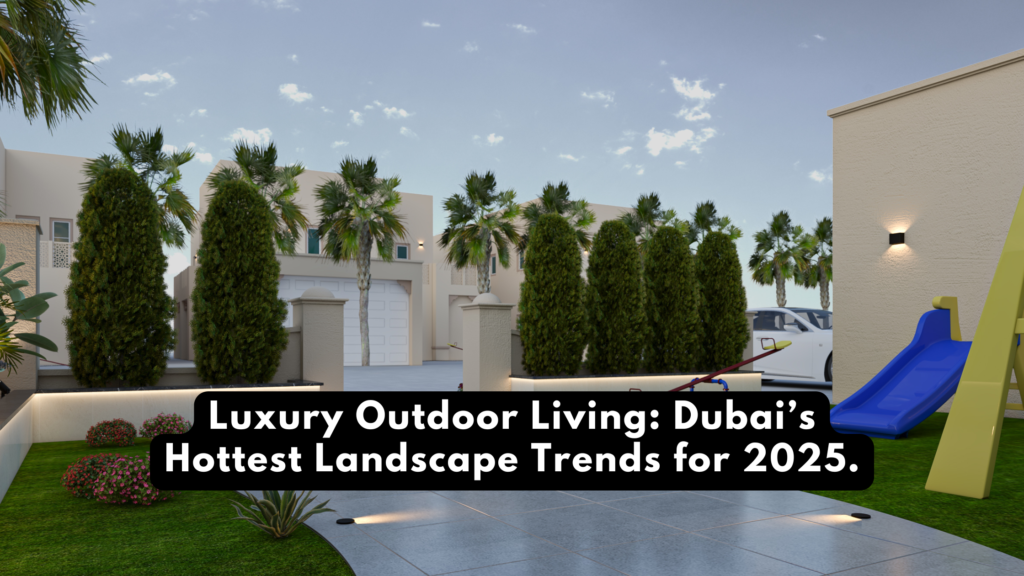
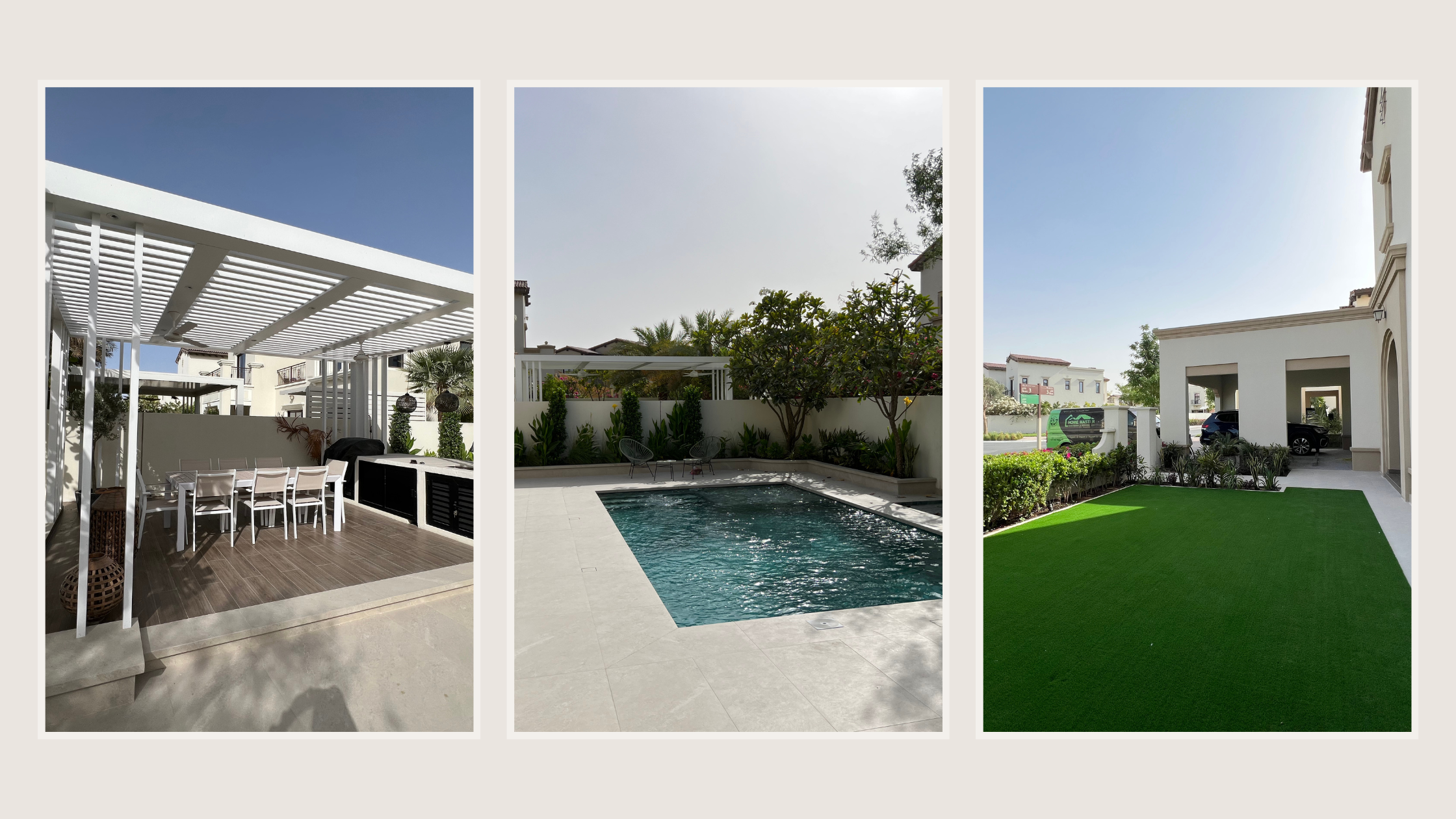
That means lighting where people actually sit. A well lit seating zone matters more than an illuminated boundary wall, so plan outdoor seating and lounge areas and their lighting together rather than treating them as separate decisions.
Maintenance in a Dusty Climate
Dust accumulation on lenses reduces output steadily, and most owners never notice because the decline is gradual.
Periodic cleaning restores a surprising amount of performance. Beyond that, fittings need re aiming as planting grows, seals need checking, and drivers occasionally need replacing. Owners who prefer this handled on schedule usually include the garden in an annual maintenance contract.
Planning Outdoor Lighting for Your Villa
Send us your garden layout and how you use the space in the evening. We will design a scheme around it.
Book a Free Site ConsultationFrequently Asked Questions
What colour temperature is best for outdoor lighting in Dubai?
Warm white, broadly 2700K to 3000K, suits planting, stone, and timber best. Cooler temperatures look harsh outdoors and wash the colour out of foliage. Whichever you choose, keep it consistent across the whole garden, because mixed temperatures are immediately obvious at night.
What IP rating do outdoor lights need here?
IP65 is a sensible minimum for general garden fittings exposed to dust and irrigation spray. Buried and in ground fittings should be IP67, and anything permanently submerged in a pool or water feature needs IP68. Dust ingress is a bigger issue in this region than rain.
Are solar garden lights worth it in Dubai?
Cheap stake lights generally disappoint, since small panels, ageing batteries, and dust buildup all reduce performance quickly. Higher quality systems with separate panels work better and make sense where cabling is impractical. For a designed garden, hardwired low voltage remains the stronger option.
Should I use low voltage or mains lighting?
Low voltage suits most villa gardens, being safer near water and easier to adjust as planting matures. Larger plots may need mains circuits. Either way, voltage drop and weatherproof terminations need designing in rather than improvising on site.
Do I need approval for garden lighting?
New external circuits and pool area lighting normally require certified installation and, depending on scope, submissions. Freehold communities often add rules on brightness and on fittings visible from the street. We confirm what applies to your property during the site survey.
How often should outdoor lights be cleaned?
Regularly, because dust on lenses cuts output gradually enough that owners rarely notice. Cleaning during scheduled garden maintenance visits keeps performance close to original, and it is a good moment to re aim fittings that planting has grown around.